Playboda Puzzle Blog

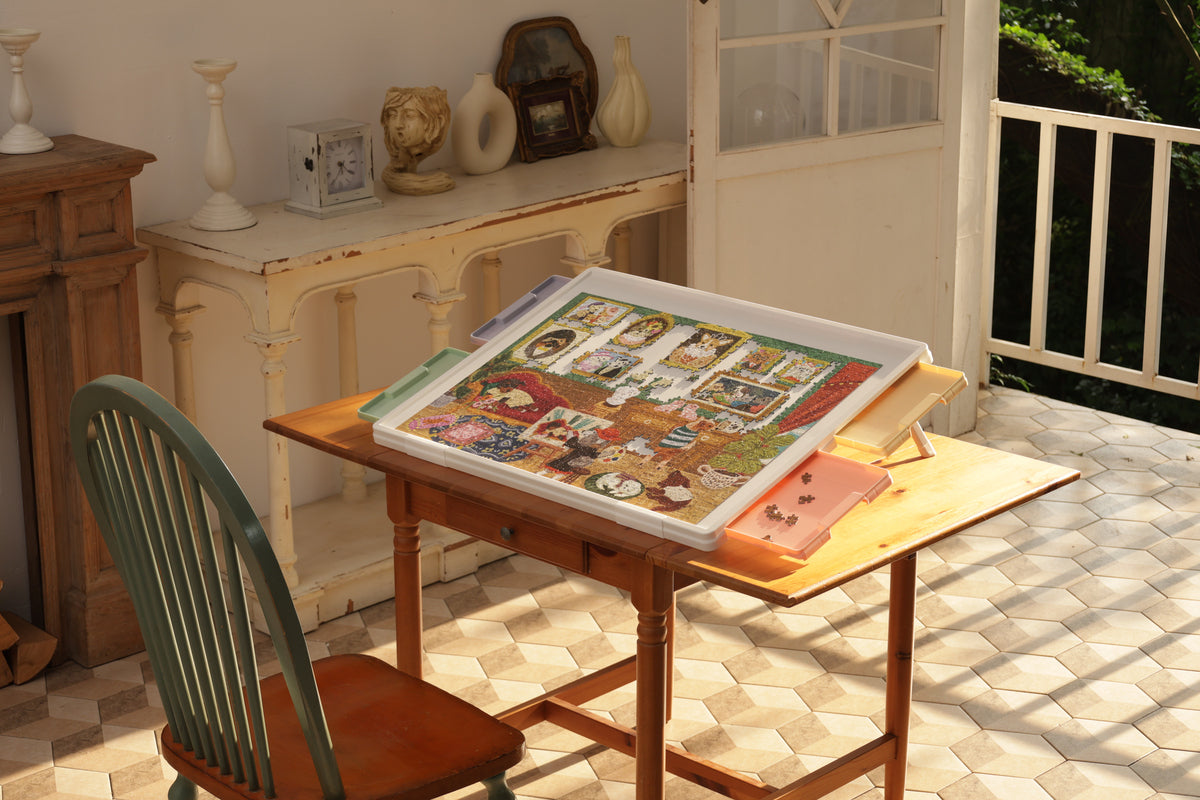
Lifestyle photo of jigsaw puzzle table with colorful storage trays in home decor environment

Playboda Puzzle Blog

How to Use a Puzzle Board

by Playboda on Oct 08 2025
Jigsaw puzzles are one of those timeless hobbies that combine focus, creativity, and relaxation. But anyone who has puzzled on a kitchen table or the floor knows how quickly frustration sets in—pieces scattered everywhere, constant interruptions for meals, and aching backs after hours of leaning over. That’s where a puzzle board makes all the difference. A puzzle board is more than a surface—it’s a system. With drawers, protective mats, rotating bases, or stands, it transforms puzzling into an organized, comfortable, and joyful activity. Let’s walk through how to use one step by step, and why so many puzzlers now call it the best puzzle board for everyday life. Step One: Building the Frame Every puzzle starts the same way: finding the edges. With a puzzle board, this step feels more structured. Instead of spreading hundreds of pieces across a dining table, you sort them directly into drawers. One drawer for edge pieces, one for sky, another for greenery or darker colors. By the time you begin, everything is organized and accessible. Jennifer, 42, a teacher from Boston, explained: “I used to balance bowls of puzzle pieces on my counters—blue in one, red in another. Now I just slide out a drawer. It’s simple, neat, and saves so much time. I can actually enjoy the process instead of managing the mess.” Step Two: Sorting by Color and Pattern Once the frame is built, puzzlers move on to filling the center. This is where puzzle boards shine. Sorting trays or drawers let you group shades of blue sky, patches of grass, or patterned clothing separately. Instead of rummaging through a mountain of pieces, you reach into the right drawer and get what you need. Many puzzlers say this is where they feel the biggest difference. The board removes chaos and replaces it with calm. You no longer waste half your puzzling time searching—you spend it building. Step Three: Adjusting with Rotation and Tilt Traditional tables force you to lean and stretch across the surface. A rotating base changes that completely. With a gentle spin, the far corner of the puzzle comes right to you. No more straining arms or bending awkwardly. For longer sessions, some boards come with tilting stands. Imagine puzzling like painting at an easel—you sit comfortably, look straight ahead, and let the puzzle come to you. It reduces back and neck pain, turning a long hobby into a sustainable one. George, 58, an engineer from Chicago, shared his experience after retirement: “I finally had time to puzzle, but my body didn’t agree. After half an hour, my neck ached. Then I tried a puzzle board with a tilt. Suddenly I could puzzle for hours without pain. It gave me my hobby back.” Step Four: Protecting Your Progress Life happens—kids run around, pets get curious, or meals need to be served. That’s why many puzzle boards include a protective mat. When you’re done for the day, cover the puzzle and everything stays secure. It presses the pieces gently, keeping them flat and ready for tomorrow. Anna, 35, a stay-at-home mom from California, described: “My toddler used to destroy half my puzzles before I could finish. Now, I cover it at night and it looks exactly the same in the morning. I never worry about lost pieces anymore.” Everyday Scenarios: How People Really Use Puzzle Boards What makes puzzle tables and boards so versatile is how easily they fit into daily life. Here are just a few examples: Watching TV: Set it by the couch and puzzle while streaming your favorite show. Bedroom relaxation: Place it on the bed for a calming activity before sleep. Family gatherings: Turn puzzling into a group project at holidays or Sunday afternoons. Picnics and travel: Lightweight enough to bring outdoors or to a cabin. Small apartments: Easy to slide under the couch or store upright when not in use. Mark, 29, a software developer from Seattle, lives in a tiny apartment: “I don’t have space for a permanent table. Sometimes I even puzzle in bed. I lift the board, slide it onto the blankets, and it feels like my own little puzzle corner. When I’m done, I tuck it under the sofa. It’s perfect.” More Than a Tool—It’s a Lifestyle What surprises most puzzlers is how quickly the board becomes part of their lifestyle. It’s not just for puzzles. Families use it for Scrabble or Monopoly, kids use it for crafts, and sometimes it doubles as a snack tray. The smooth surface wipes clean, so coffee spills or cookie crumbs aren’t a disaster. The versatility means it adapts to you. Whether you’re a retiree rediscovering hobbies, a busy parent looking for quality time, or a young professional in a small apartment, a puzzle board fits right in. The Playboda Promise At Playboda, we design puzzle boards with one principle: Light to lift. Built to last. Our boards for puzzles are: Lightweight but durable, made from sturdy ABS. Designed with rotating bases, tilt stands, and drawers to support every puzzling style. Equipped with protective mats to keep progress safe. Sized for both 1000- and 1500-piece puzzles, so no project feels too big. Because the best puzzle board isn’t just about solving puzzles—it’s about making puzzling a joyful, sustainable part of your life. So how do you use a puzzle board? You build the frame, sort by color in drawers, rotate the base to bring pieces closer, tilt the stand for comfort, and cover it to protect your progress. Beyond that, you bring it into your living room, your bedroom, even your outdoor adventures. It’s more than furniture—it’s your puzzling partner. 👉 Ready to see the difference? Explore our [Puzzle Boards Collection] today and discover why puzzlers everywhere call Playboda the best puzzle board they’ve ever owned.
Playboda puzzle table showing finished colorful jigsaw puzzle on black surface with storage drawers

Playboda Puzzle Blog

How to Mount a Puzzle Without Foam Board

by Playboda on Oct 05 2025
Anyone who has ever finished a large jigsaw puzzle knows the moment of pride when the final piece clicks into place. But that pride is often followed by a dilemma: the puzzle is delicate, the pieces shift easily, and moving it from the table to a frame can feel like carrying a house of cards. If you try to glue it directly on the dining table, you risk ruining both the table and the puzzle. Without the right setup, the memory of hours of puzzling can quickly turn into frustration. That’s where a puzzle board comes in. A puzzle board creates a portable, stable surface so you can mount and preserve your puzzle without the need for a foam board underneath. Instead of sliding a flimsy sheet under fragile pieces, you have a reliable base that moves with you. Many puzzlers now call it the best puzzle board for preserving their work as well as enjoying the process. The Dilemma: Mounting Without Support Traditionally, foam board is used as a backing to transfer and mount puzzles. But not everyone has one handy, and even if you do, sliding it under a finished puzzle is nerve-wracking. The pieces can separate, edges may bend, and sometimes entire sections collapse. Linda from Toronto recalls her frustration: “I tried to mount a 1000-piece puzzle on a poster board once. Halfway through, the pieces shifted, and I basically had to start over. It was heartbreaking.” Foam board solves one problem but creates another: it’s just another item to buy and store, often bulky and awkward. That’s why many puzzlers ask the same question: “How can I mount my puzzle without foam board?” Why a Puzzle Board Works A large puzzle board gives you exactly what foam board cannot: a dedicated, sturdy surface designed to move with your puzzle. Because the board itself is portable, you can build the puzzle, apply adhesive, and mount it all in one place without ever sliding anything underneath. James from Seattle explains: “I glued my puzzle right on the puzzle board. The ABS surface didn’t absorb the glue, so after it dried, the puzzle lifted perfectly. My dining table was safe, and the puzzle looked flawless in the frame.” Unlike makeshift solutions, puzzle boards are flat, non-porous, and easy to clean. That means even if glue drips or spreads, it won’t damage the board. You simply wipe it down and it’s ready for the next project. How to Mount a Puzzle Without Foam Board So, how does it actually work in practice? Here’s a step-by-step method many puzzlers use: Finish the Puzzle on a Puzzle BoardBuild directly on the board. The surface is stable, so you don’t need to move the puzzle when it’s complete. Prepare the PuzzlePlace wax paper or a thin protective sheet under the puzzle if you want extra assurance, though many boards don’t require it. Smooth the surface gently with your hands to make sure the pieces are flush. Apply Puzzle GlueUse a puzzle-specific adhesive. Pour a small amount in the center and spread evenly with a sponge or plastic card. Cover the entire surface, making sure glue seeps into the cracks between pieces. Let It DryDepending on the glue, drying takes 1–4 hours. The puzzle board holds everything in place so no section shifts during drying. Mount or FrameOnce dry, carefully lift the puzzle. Because you worked on a non-absorbent surface, the puzzle won’t stick permanently to the board. From here, you can slide it into a frame or mount it on a display surface. Tips and Cautions Don’t overuse glue: Too much will warp pieces. Thin, even layers are best. Check board material: ABS boards are ideal because they don’t absorb glue. Wood or cardboard surfaces may stain or warp. Consider covers: Some boards come with protective mats. These can press the puzzle while drying, ensuring flatness. Be patient: Rushing the drying stage is the most common mistake. User Experiences Mounting puzzles isn’t just about preservation—it’s about the story behind it. Emily from New Jersey shared: “I mounted my first 1500-piece puzzle with my daughter. We spread the glue together, waited for it to dry, and then lifted it off the puzzle board. Seeing it framed on the wall feels like hanging a piece of our family history.” Sarah from Texas laughed about her initial skepticism: “I thought I’d ruin the board with glue, but it wiped clean in seconds. Now I’ve preserved three puzzles, and the board still looks brand new.” These stories show how a puzzle board not only simplifies mounting but also turns it into part of the joy of puzzling—extending the experience beyond the last piece. Why Playboda Puzzle Boards Make It Easier At Playboda, our motto is Light to lift. Built to last. That’s exactly why our puzzle tables and boards are designed with mounting in mind. They’re: Lightweight, so you can move your puzzle to a safe space while it dries. Made from durable ABS, which resists glue, stains, and warping. Designed with protective mats that double as pressing tools. Large enough to handle 1000- and 1500-piece puzzles with ease. With a Playboda board, you don’t need foam backing, extra tools, or complicated transfers. You puzzle, you glue, you frame—simple as that. Mounting a puzzle without foam board doesn’t have to be a headache. With the right puzzle board, you can skip the risky transfer, glue directly on the surface, and keep your puzzle safe for framing. More than just a tool, the board becomes part of the memory—the last step of the puzzle journey. 👉 Ready to try it yourself? Explore our [Puzzle Boards Collection] and discover why so many puzzlers call it the best puzzle board for building, preserving, and enjoying puzzles for years to come.
Playboda puzzle board with drawers and trays used for assembling a 1500 piece Ravensburger jigsaw puzzle

Playboda Puzzle Blog

How Does a Puzzle Board Work?

by Playboda on Oct 05 2025
At first glance, a puzzle board looks like a simple flat surface. But ask anyone who owns one, and they’ll tell you it feels like magic. Instead of fighting for space on the dining table or risking your puzzle on the floor, you suddenly have a tool designed just for puzzling. A puzzle board works by creating an independent, portable, and functional space for your puzzle pieces. It’s a dedicated zone where pieces can be sorted, protected, and enjoyed at your own pace. The genius is in its simplicity—yet the details are what make it one of the best puzzle board solutions for hobbyists, families, and even seniors. The Principle Behind a Puzzle Board The principle is straightforward: puzzling is easier and more fun when you have a surface that’s flat, stable, and designed for the task. Traditional dining tables aren’t made for it, and the floor certainly isn’t friendly on your back or knees. That’s where boards for puzzles step in. They create a stable foundation that doesn’t need to be cleared away every night. You can leave your puzzle in progress, return the next day, and pick up right where you left off. Take Michael from Ohio, for example. Michael is a longtime puzzler who always worked at his kitchen table. Every evening, dinner meant packing everything up and losing his flow. It got to the point where he thought about giving up on big puzzles altogether. When he finally tried a puzzle board, it changed everything. “For the first time, I didn’t have to fight for the table,” he said. Now he simply covers his puzzle or slides the board aside and picks up the next day as if nothing happened. For him, the puzzle board transformed puzzling from a chore into a relaxing habit. Features That Make It Work The magic of a puzzle board lies in the features that adapt to puzzlers’ real needs. Over time, manufacturers refined the design, adding clever solutions: Drawers and trays: Keep edge pieces, colors, and tricky sections separated. Rotating bases: A rotating or “spinner” board lets you turn the puzzle toward you. Tilting stands: Reduce neck and shoulder strain during long puzzling sessions. Lightweight, portable build: Sturdy yet easy to move from room to room. Protective covers: Keep progress safe from pets, kids, or accidents. Linda from Vancouver experienced this firsthand. She used to take weeks to finish a puzzle, mostly because she spent so much time hunting for pieces. When she switched to a board with drawers, everything changed. Now she sorts sky, edges, and unique pieces into different trays, opening them like a professional during a match. “It feels like I’m competing,” she joked, “but really, it just makes me faster and more focused.” What used to take weeks now takes just days. How Does a Puzzle Board Actually Work in Real Life? It’s one thing to list features—it’s another to see them in action. Sarah from Texas is a mom of two who wanted puzzling to be a family activity. The problem was her kids quickly lost patience. That changed when she brought home a large puzzle board with a rotating base. Suddenly puzzling felt like a game show. Her daughter loved spinning the board, laughing every time it turned, and the whole family stayed engaged. On weekends, the same board doubled as a Monopoly table or snack station. “Sometimes it holds puzzles, sometimes popcorn,” Sarah said. “Either way, it brings us together.” Then there’s James in California, who balances puzzling with working from home. He set up a tilting puzzle board near the window, using it for puzzles at night and his laptop during the day. One morning he spilled coffee all over it. He braced for disaster—only to find the ABS surface wiped clean in seconds. “If that were my wood desk, it would be ruined,” he laughed. For James, the puzzle board isn’t just a tool for fun; it’s the most versatile table in his house. And Emily from New Jersey finally completed her first 1500-piece puzzle thanks to a large puzzle board. She had tried before, but her dining table was too small, and interruptions forced her to pack it away. With a rotating board and storage drawers, she worked section by section without strain. “I never thought I’d finish one that big,” she admitted, “but it felt surprisingly easy. I enjoyed every step.” Now, she even uses the board for weekend game nights with friends, calling it her “social table.” Why It’s Fun and Functional The real joy of a puzzle board is that it makes puzzling sustainable. Without it, puzzling often feels like a temporary hobby—something you do once in a while until frustration wins. With it, puzzling becomes part of daily life. You know your pieces are safe, you know your progress will wait for you, and you know you can enjoy the process without stress. That’s why owners often say the best puzzle board isn’t just about finishing puzzles—it’s about the experience. It’s the laughter with family, the quiet evening ritual, or the satisfaction of sliding the board under the sofa at the end of the night. The Playboda Promise At Playboda, our philosophy is simple: Light to lift. Built to last. Our puzzle tables and boards are designed for real people with real lives. They’re: Lightweight and easy to move. Durable and stain-resistant. Designed with drawers, rotation, and tilt to make puzzling comfortable. Multipurpose for puzzles, games, crafts, and everyday fun. Because at the end of the day, a puzzle board works not just as a tool—it works as a way to create joy in everyday spaces. So, how does a puzzle board work? It works by making puzzling simple, comfortable, and fun. It works by protecting your progress, organizing your pieces, and turning a hobby into a ritual you look forward to every day. If you’re ready to see how it can transform your puzzling—and your evenings—it’s time to try one for yourself. 👉 [Explore the Puzzle Boards Collection] and find the one that fits your style. From a compact board for small puzzles to a large puzzle board for big challenges, you’ll discover why puzzlers everywhere call it the best puzzle board they’ve ever owned.
Playboda puzzle board with drawers and sorting trays holding a colorful car jigsaw puzzle in progress

Playboda Puzzle Blog

Why Is a Puzzle Board Fun?

by Playboda on Oct 05 2025
What Is a Puzzle Board? A puzzle board is exactly what it sounds like: a flat, dedicated surface designed for puzzling. Instead of spreading pieces across the dining table or crouching on the floor, you get a space that exists only for your hobby. Smooth edges, portable size, and smart features—like drawers, tilting stands, or rotating bases—make puzzling easier and more enjoyable. It may look simple, but once you use one, you’ll understand why so many puzzlers call it the best investment for their hobby. The Origin of Puzzle Boards The idea came from a very common problem: lack of space. Imagine spending hours on a 1000-piece puzzle at the dining table, only to hear, “Dinner’s ready!” Do you pack it up, or risk spaghetti sauce on your puzzle? That frustration inspired the first boards for puzzles. They gave puzzlers their own territory, a surface that could move, slide under a bed, or sit safely in a corner until the next puzzling session. Michael from Ohio told us:“I used to do puzzles on the floor, and my dog thought every piece was a snack. Once I got a puzzle board, my puzzles survived—and so did my knees.” What Does a Puzzle Board Do? At its core, a puzzle board provides a dedicated workspace. But in practice, it does more than that: Organizes pieces: Drawers and trays keep edges, colors, and unique shapes separated. Protects progress: No more tearing down your puzzle at mealtime; just move or cover the board. Adds comfort: Tilting stands reduce neck strain, while rotating bases save you from reaching across the table. Offers flexibility: Families quickly discover puzzle tables and boards double as game tables, craft stations, or snack spots. Linda from Vancouver shared:“We used ours for Scrabble last week. The kids loved it, and I loved not clearing the dining table again.” Why Is a Puzzle Board Fun? The best puzzle board doesn’t just help you puzzle—it makes puzzling fun. It makes puzzling social. A rotating puzzle board lets everyone take turns, turning puzzling into a group activity instead of a solo struggle. It adds ritual. Having a dedicated space makes puzzling feel intentional. You sit down with tea or coffee, and the puzzle board becomes your “no-stress zone.” It feels professional. The drawers, the tilt, the neat setup—it all makes you feel like a pro, even if you’re only working on a 500-piece picture of kittens. Emily from New Jersey laughed:“The drawers make me feel like I’m in a puzzle competition. In reality, I’m just sipping wine and teasing my husband for missing corner pieces.” Large Puzzle Board = Large Fun For bigger puzzles, the right surface makes all the difference. A large puzzle board transforms what could feel overwhelming into a satisfying challenge. Instead of leaning across the table, you rotate the board, focus on your section, and keep momentum going. The joy comes from how simple it becomes to tackle a 1500-piece masterpiece without losing your patience—or your posture. Puzzle Tables and Boards Beyond Puzzles Many people are surprised to discover that their puzzle board is more versatile than expected. Families use them for board games, arts and crafts, or even casual dining. The smooth ABS surface wipes clean in seconds—yes, even after a coffee spill. Sarah from Texas shared: “My daughter spins the board like Wheel of Fortune, and we both laugh. Some nights it’s for puzzles, some nights it’s for popcorn and movie snacks. Either way, it’s fun.” This flexibility is why so many call puzzle boards the best hobby purchase they’ve made. They’re not just boards for puzzles—they’re everyday tools for play and connection. Why People Keep Coming Back The secret to a puzzle board’s fun is sustainability. Without it, puzzling often feels like a “one-off event.” With it, puzzling becomes a habit. You can stop mid-puzzle and pick up where you left off. You can move it between rooms depending on your mood. You can puzzle with friends, family, or solo—without rearranging your house. That consistency is what turns puzzling into a true hobby, not just an occasional pastime. Why Choose Playboda? At Playboda, we believe puzzles are more than a game—they’re therapy, family bonding, and moments of calm. That’s why our motto is Light to lift. Built to last. Our puzzle tables and boards are designed with real life in mind: Lightweight ABS: easy to carry, resistant to stains, and built to last for years. Thoughtful design: drawers, tilt stands, and rotation features adapt to every puzzling style. Multipurpose use: from puzzles to board games, crafts, or casual meals. Because the best puzzle board isn’t just about finishing puzzles—it’s about creating everyday joy. So, why is a puzzle board fun? Because it makes puzzling easier, more social, and far more enjoyable. It turns ordinary evenings into memorable moments—whether you’re finishing a 1500-piece challenge, laughing with family, or simply spinning the board just for fun. A puzzle board is more than furniture. It’s a little piece of happiness with four corners. 👉 Ready to experience it yourself? Explore our [Puzzle Boards Collection] and find the board that fits your style—because the best puzzle board is the one that makes puzzling fun again.
Playboda puzzle board used as a gaming table for cards and board games

Playboda Puzzle Blog

More Than Puzzles: Everyday Uses of a Puzzle Table

by Playboda on Sep 25 2025
Why Puzzle Tables Exist Puzzle tables started as a simple solution to a frustrating problem: there was never enough space to leave a puzzle out. If you’ve ever worked on a 1000-piece or 1500-piece puzzle at the dining table, you know the cycle. You spread out the pieces, get into the flow, and then—someone calls for dinner. Suddenly the puzzle becomes an obstacle, and every piece has to be packed up. The joy of puzzling collides with the reality of shared living spaces. The invention of a puzzle table gave enthusiasts their own dedicated, portable surface. Instead of competing with the dining table or coffee table, puzzlers finally had a flat board they could claim. It was freedom: puzzles could stay in place overnight, and the dining room could go back to being a dining room. But as many owners quickly realized, a puzzle table doesn’t stop being useful once the puzzle is done. It becomes a flexible, lightweight piece of furniture that adapts to daily life. Beyond Puzzles: How People Really Use Puzzle Tables Family Game Nights One of the most common “second lives” of a puzzle table is as a board game table. Families use them for Monopoly, Scrabble, card games, and even chess. The drawers that once stored puzzle pieces are suddenly perfect for dice, cards, and game tokens. A mother in Chicago shared her experience: “On Friday nights, we used to clear the dining table for board games, and then scramble to set up dinner afterward. Now we just pull out the puzzle table. When it’s time to eat, I lift it up and move it to the side. Nothing gets disturbed, and the dining table stays ready.” That flexibility—simply moving the whole setup without disturbing the game—is what makes puzzle tables uniquely suited for families. Casual Dining and Snacks A multipurpose puzzle table also doubles as a dining surface. Some use it for afternoon tea, others for weekend snacks, and plenty of people admit to using it for dinner in front of the TV. Its portable size makes it easy to position anywhere in the living room. The material matters here. Unlike wood, which stains easily, an ABS puzzle board wipes clean in seconds. Coffee, soda, or even spaghetti sauce can be cleaned off with a damp cloth. One user put it this way: “I spilled half my latte on the puzzle table last week. It didn’t even leave a mark—just wiped it off and kept working.” For families with kids, this durability is priceless. A puzzle table can handle coloring books, juice spills, and sticky fingers without showing wear. Work-from-Home Station Since the pandemic, more people work or study from home. A puzzle table naturally steps in as a compact desk. The flat, neutral surface is large enough for a laptop and notebooks, while the drawers can hold pens, chargers, or Post-its. The tilting models have another hidden benefit: ergonomics. Adjusting the angle reduces neck and shoulder strain, just as it does for puzzling. For people without room for a full office desk, a puzzle table provides a practical alternative. It’s lightweight enough to move around the home: near a sunny window in the morning, in the bedroom for focus in the afternoon, or by the couch in the evening. Creative Projects and Hobbies Puzzle tables also lend themselves to other hobbies. Diamond painting, Lego sorting, sewing, and model building all benefit from a dedicated, flat workspace. The drawers keep small pieces organized, while the cover (on some models) protects projects from pets or curious toddlers. For one father in Texas, the table became a craft station for his kids. “They each got a drawer for their art supplies. They spread out paper and crayons, and when it’s dinner time, we just move the whole table to the side. No more picking up fifty crayons from the floor.” This adaptability transforms the table into a family tool—not just a puzzler’s accessory. Independent Space in a Shared Home What really sets a puzzle table apart is that it creates a sense of independent space. In a home where surfaces are constantly claimed—dining tables, coffee tables, countertops—the puzzle table belongs only to you. It’s not tied to mealtimes or chores. You can set it up by a window, in a quiet corner, or even in the bedroom. That personal corner becomes a place to focus, relax, and create, whether you’re puzzling, journaling, or sketching. This sense of ownership resonates especially with people who crave a little solitude in busy households. A puzzle table becomes more than a tool—it’s a small sanctuary. Material Matters: Why ABS Makes a Difference Traditional puzzle boards were made of wood. They looked classic but were heavy, harder to clean, and vulnerable to warping. Modern puzzle tables often use ABS plastic, which changes the game: Lightweight: Easy to move from dining room to living room. Durable: Resistant to scratches and everyday wear. Easy to clean: Coffee, tea, or paint spills wipe off without staining. Long-lasting: Doesn’t warp like wood in humid conditions. One customer summed it up: “The ABS puzzle board feels like something I can keep for years. It’s strong enough for my kids, light enough for me to move, and doesn’t need special care.” Real-Life Scenarios To make this concrete, here are a few everyday examples: Game night moves: Family is playing a board game on the puzzle table. Dinner is ready. Instead of ending the game, you simply lift the puzzle table and move it aside. The game stays intact, the dining table stays free. Coffee spill rescue: Working from home, you spill your morning coffee. On a puzzle table with ABS surface, a quick wipe leaves no trace. On a wooden table, it would stain. Craft control: Kids are making paper crafts. Each drawer holds scissors, glue, and paper. When it’s bedtime, the whole table slides to the corner, ready for tomorrow. Pet-proofing: With a fitted cover, the puzzle or craft project stays safe overnight, even with a curious cat in the house. Everyday Value of a Puzzle Table A puzzle table might start as a gift for a hobby. But in practice, it turns into a daily-use piece of furniture. It’s used for puzzling, yes—but also for dining, working, gaming, and creating. Its versatility, portability, and easy maintenance make it valuable far beyond its original purpose. Instead of a single-use item, it becomes a multipurpose puzzle table—a small, adaptable surface that makes everyday life easier. 👉Multipurpose Puzzle Tables Collection Gentle Call to Action If you’ve ever felt your home lacked space for hobbies, or you’re tired of clearing the dining table for every activity, a puzzle table can be the solution. It’s light to lift, built to last, and ready to adapt to however you live. 👉 [Rotating Puzzle Table ] | [Tilting Puzzle Table ] | [2-in-1 Puzzle Table]

Playboda puzzle table with drawers and trays for easy puzzle piece sorting

Playboda Puzzle Blog

Rotating vs Tilting: Which Puzzle Board Actually Saves Your Neck (and Your Reach)?

by Playboda on Sep 25 2025
Rotating vs Tilting: Which Puzzle Board Actually Saves Your Neck (and Your Reach)? Why These Boards Exist If you’ve ever worked on a 1000-piece puzzle at your dining table, you know the struggle: one side feels a mile away. You stretch, you stand, maybe you even nudge the table to get closer. Then after a while, your neck starts to ache from leaning forward. That’s why puzzle boards come in two clever designs. Rotating boards bring the puzzle closer with a simple spin, while tilting boards lift the angle so you can sit upright. And yes, some combine both—because most of us deal with both problems. The Rotating Experience I remember finishing a sky section on a rotating board. Instead of dragging my arm across the puzzle, I just nudged the board a little. Suddenly, the edge I needed was right in front of me. Rotating feels simple but makes a big difference: No awkward reaches—just a smooth spin. Everyone at the table can take turns without switching seats. Sorting feels neater when you keep color groups in front of you. 👉   Rotating Puzzle Board The Tilting Difference Long puzzling sessions are when tilting really shines. With the board angled up, I can sit back in my chair instead of hunching over. The colors pop more clearly too—less glare, easier on the eyes. A small tilt (10–15°) is often enough. You don’t need a big slope; just enough to keep your shoulders relaxed. 👉 Tilting Puzzle Board with Stand When You Don’t Want to Choose Some nights I tilt the board for comfort, then rotate it so my daughter can work on the corners she loves. That’s where a 2-in-1 board comes in—it saves your body and makes puzzling together smoother. What to look for in a good 2-in-1: Stable, wide base for smooth rotation. Adjustable tilt settings, easy to lock. Lightweight but sturdy (ABS is great). Enough surface for 1000–1500 pieces. Optional drawers or cover for storage and pet-proofing. 👉 2-in-1 Rotating + Tilting Puzzle Board Everyday Tips for Smoother Puzzling Adjust your chair first, then set the tilt. Rotate in small steps—pieces stay in place. Soft lighting + neutral surface = easier color match. Use drawers for edge pieces or tricky colors. Tomorrow-you will thank today-you. 👉 2-in-1 Rotating + Tilting Puzzle Board Quick FAQ Will rotating scatter my pieces? Not if the base is stable. Just rotate gently. What tilt angle should I try? Start with 10–15°. Enough to relax your shoulders. Can it handle 1500 pieces? Yes—look for boards around 32"x24"–35"x27".👉 1500 PCS Puzzle Board Is ABS really better than wood?ABS is lighter, easy to carry, and cleans in seconds. Wood looks nice but can be heavy. What about cats?Get a cover. It keeps pieces safe overnight.👉 Puzzle Board with Cover
Puzzle Storage Ideas: Why a Puzzle Board with Drawers Is the Best Choice

Playboda Puzzle Blog

Puzzle Storage Ideas: Why a Puzzle Board with Drawers Is the Best Choice

by Playboda on Aug 22 2025
Puzzle Storage Ideas: Why a Puzzle Board with Drawers Is the Perfect Solution Every puzzler has faced the same challenges—clearing the dining table before a meal or rescuing pieces from a curious pet. That’s when you realize how important puzzle storage truly is. A well-designed puzzle board helps sort pieces, protect your unfinished work, and, most importantly, keep your space neat by giving the puzzle a proper home. Rotating Boards: Convenience Meets Function Take the rotating puzzle board with drawers: it not only offers storage and protection but also rotates, making every corner easy to reach and the puzzling process smoother and more enjoyable. In this guide, we’ll share practical yet stylish puzzle storage ideas—whether you live in a cozy apartment or a lively family home, your puzzles can stay perfectly organized. Traditional vs. Modern Storage Options When it comes to puzzle storage, most people start with more traditional methods. Puzzle roll-up mats or puzzle pads, for example, are lightweight and inexpensive, but the downside is that they often bend the pieces, and a half-finished puzzle can easily be damaged. Puzzle storage boxes can keep loose pieces together, but they usually lack the sorting and protection functions puzzlers truly need. That’s why more and more puzzle enthusiasts are turning to better and more modern solutions—puzzle boards and tables designed specifically for puzzling. Unlike ordinary storage options, these products provide a smooth surface that supports the assembly process, while built-in drawers not only protect the puzzle but also offer sorting features. For instance, a puzzle board with drawers allows you to sort pieces by color or edge, bringing order to an unfinished puzzle that might otherwise look messy, and striking a fine balance between practicality and aesthetics. Protection Features: More Than Just Storage For even greater convenience, some boards include protective features. A puzzle board with drawers and cover, for example, organizes your pieces while shielding them from dust, pets, or accidental bumps. With it, you can pause anytime and return to puzzling whenever you like—without worrying that your half-finished masterpiece will be ruined. Compared with traditional roll-up mats or storage boxes, these designs give both you and your puzzle a dedicated space, making storage not only practical but also beautifully integrated into your home. Boards vs. Tables: Which Is Right for You? Choosing the right puzzle storage often depends on the size of your space and your puzzling habits. A puzzle board with drawers is lightweight and flexible—it can be placed on a dining table, coffee table, or any flat surface, and easily stored away once you’re finished. In contrast, a jigsaw puzzle table with drawers offers greater stability and a larger work area. If you have a dedicated hobby room or extra space where a puzzle can remain set up for days without being cleared away, then a puzzle table is the more ideal option. So how do you decide? In a shared or compact living space, a portable puzzle board keeps things flexible and prevents clutter. But if you’re fortunate enough to have a dedicated puzzle area, a puzzle table can provide a more comfortable and long-term puzzling experience. Practical Tips for Puzzle Storage at Home Choose the right size tool: For 500–1000-piece puzzles, a puzzle board sized around 35” x 27” works perfectly. For larger puzzles, consider a dedicated puzzle table. Build a habit of putting pieces away: Always return pieces to drawers after each session to avoid clutter and confusion. Create a clean puzzle space: Keep the area simple and soothing—use soft lighting, greenery, and light music to enhance the experience. With these small adjustments, puzzle storage will no longer feel like a chore—it becomes part of the pleasure of puzzling itself. Conclusion: Find the Puzzle Storage That Works for You If you’ve ever felt frustrated by scattered pieces or the constant need to clear your table, now might be the perfect time to upgrade your storage. For many hobbyists, a puzzle board with drawers offers the ideal balance of practicality, aesthetics, and flexibility. Try adding a puzzle board to your routine, and you’ll find the puzzling process becomes more organized and relaxing. After all, the right storage is more than just a practical tool—it’s an essential part of the joy of puzzling itself. Try PLAYBODA’s 1500-piece puzzle table and see the difference for yourself!
Small Space, Big Fun: How to Enjoy Puzzles in Compact Living Rooms - Playboda

Playboda Puzzle Blog

Small Space, Big Fun: How to Enjoy Puzzles in Compact Living Rooms

by Playboda on May 18 2025
Just because you’re short on space doesn’t mean you have to be short on fun. Living in a small apartment or sharing your living room with a cat, a couch, and three houseplants? You can still enjoy your favorite hobby—puzzling—without turning your space into chaos. Here’s how to make puzzles work with your space, not against it. Why Puzzles Are Perfect for Small Spaces Puzzles are quiet, screen-free, and don’t require a lot of equipment—just a bit of table space and a little patience. Whether you’re flying solo or puzzling as a family, they’re the ultimate compact pastime. And let’s be honest: there’s something super satisfying about turning a tiny table into a masterpiece. The Right Puzzle Board Makes All the Difference If your coffee table is your dining table and your desk, you need a smart solution. A puzzle board for small spaces is your secret weapon. Meet Playboda: The Puzzle Board Designed for Tight Quarters Foldable puzzle board: Sets up in seconds, folds down just as fast Rotating base: No need to lean, twist, or contort yourself to reach every piece Slide-in drawers: Keep pieces sorted and safe from pets, kids, or clumsy roommates It’s like a Murphy bed, but way more fun. Puzzle Board Storage Tips That Actually Work Store your puzzle board vertically behind a door or under the couch Use the built-in drawers to organize pieces by color or section Keep accessories like sorting trays or puzzle glue in a slim box or shelf nearby Pro tip: If you’re constantly picking pieces off the floor, it’s time to upgrade to something with built-in storage. Trust us—your feet will thank you. Final Thoughts Tiny apartment? Busy living room? No problem. With a compact, foldable puzzle board like Playboda, you can enjoy puzzles without sacrificing floor space, table space, or your sanity. Small space, big puzzle energy.
How to Choose the Right Puzzle Size: 1000 or 1500 Pieces? - Playboda

Playboda Puzzle Blog

How to Choose the Right Puzzle Size: 1000 or 1500 Pieces?

by Playboda on May 06 2025
Puzzles are more than just a hobby — they're a way to unplug, challenge your mind, and spend meaningful time with loved ones. Whether you're shopping for your very first jigsaw puzzle or looking for the perfect gift, choosing the right puzzle size is an important part of the experience. In this puzzle size guide, we'll compare 1000 vs 1500 piece puzzles, and help you decide what fits your time, space, and skill level best — plus show you how to pair it with the right puzzle board for the ultimate setup. 🧠 1. Puzzle Experience Level: Beginner or Veteran? 1000-piece puzzles are widely considered the gold standard for adults who are new to puzzling. They're big enough to feel rewarding but not so large as to be overwhelming. Great for family puzzle nights, rainy weekends, or relaxing solo time. 1500-piece puzzles are designed for more experienced puzzlers who enjoy complex patterns, longer projects, and spending several days — or even weeks — completing a single puzzle. These are perfect for people who already have a dedicated puzzle space at home. 🎁 Gifting Tip: In North America, a 1000-piece puzzle is the safest, most popular gift size. It’s challenging, satisfying, and less likely to end up half-finished due to size or time limitations. 📏 2. Space Considerations: Where Will You Be Puzzling? Not all homes have a dedicated puzzle table, especially in apartments or shared living spaces. The size of your puzzle affects where and how you can work on it. Here’s a simple breakdown: Puzzle Size Finished Dimensions (avg) Recommended Puzzle Board 1000 pieces ~27 x 20 inches (70x50cm) Playboda Small Puzzle Board 1500 pieces ~33 x 24 inches (85x60cm) Playboda Large Puzzle Board Why use a puzzle board? In many North American homes, dining tables double as puzzle stations. A high-quality board like those from Playboda lets you move or store your puzzle mid-progress without losing pieces or disturbing your layout. The non-slip surface, sorting drawers, and foldable design make it perfect for families, seniors, or anyone with limited space. 🎯 3. Who Is the Puzzle For? Choosing the best puzzle size depends on the recipient. Here are some practical suggestions: For teens, seniors, or beginners: Start with 1000 pieces. It’s accessible and satisfying without being too difficult. For avid puzzlers with patience and a puzzle space: 1500 pieces offer a deeper challenge and longer engagement. For couples or families: A 1000-piece puzzle is a great bonding activity that fits most coffee or dining tables with a portable board. 🧩 4. Puzzle Theme: Visual Complexity Matters Not all puzzles are created equal. A 1000-piece puzzle with abstract art or color gradients can be just as challenging as a 1500-piece landscape. Consider both the image design and the piece count when choosing. If you’re shopping for a gift, opt for popular themes like nature scenes, animals, or travel destinations. They tend to be more engaging and universally appealing — especially when paired with a sleek puzzle board that elevates the entire gift. ✅ Final Thoughts: Puzzle Smart, Puzzle Happy Whether you’re choosing a 1000 or 1500-piece puzzle, the most important thing is that it fits your lifestyle. Time, table space, and attention span all matter. And don’t forget — using the right puzzle board, like those from Playboda, can turn a frustrating puzzle session into a smooth, relaxing one. So puzzle smarter: choose the right size, theme, and tools for the job — and enjoy every moment, piece by piece.
Build a Morning Puzzle Habit That Boosts Your Focus — in Just 10 Minutes a Day - Playboda

Playboda Puzzle Blog

Build a Morning Puzzle Habit That Boosts Your Focus — in Just 10 Minutes a Day

by Playboda on May 06 2025
If mornings feel rushed or unfocused, here’s a surprisingly effective solution: puzzles. That’s right. Adding a short puzzle session to your morning routine isn’t just relaxing — it’s a powerful way to clear your mind, boost mental sharpness, and create a sense of calm before the day takes over. Why Start Your Day With a Puzzle? 🧠 Mental Warm-Up: Like stretching for your brain. Working on a puzzle activates both logic and pattern recognition — the perfect pre-workout for your mind. ☕ Stress-Free Focus: No screens, no to-do lists — just a few quiet moments of intentional focus. ⏳ Better Flow: A short puzzle session helps you become more aware of your time and improves your ability to get into deep work later in the day. Make Space for It: Your Personal Puzzle Spot Habits stick better when you create the right environment. Set up a cozy “puzzle corner” in your apartment, home office, or even next to your kitchen window. We recommend our Portable Puzzle Table — lightweight, foldable, and easy to store when not in use. It’s perfect for small-space living and adds just the right touch of intention to your morning ritual. 💡 Pro Tip: Keep your puzzle spot distraction-free. Pair it with your morning coffee, a soft playlist, or natural light for maximum focus. How to Make Puzzling a Daily Habit Start small: Just 10–15 minutes a day is enough to make a difference. Use habit stacking: Add puzzling right after an existing routine — like making your coffee or feeding your pet. Track it: Try a simple app or checklist to stay consistent. A visual streak can be surprisingly motivating. Why Our Puzzle Table Makes It Easier Our Portable Puzzle Table was made for mindful moments like these. Whether you’re in a city apartment, a dorm, or working from home, it turns any space into a calm, productive corner. One Piece, One Breath, One Better Morning Not every morning needs to be fast-paced and chaotic. Just 10 minutes, one piece at a time, can shift your energy, mindset, and momentum for the day ahead.
What Makes a Puzzle Table Worth Buying? 5 Must-Have Features - Playboda

Playboda Puzzle Blog

What Makes a Puzzle Table Worth Buying? 5 Must-Have Features

by Playboda on Apr 07 2025
Shopping for the perfect puzzle board or table? With so many options out there, it can be hard to know which features truly make a difference. Whether you’re a casual puzzler or a dedicated jigsaw enthusiast, choosing the right puzzle board can dramatically improve your experience. Here's what to look for before you buy. 1. Smooth 360° Rotation A rotating puzzle board lets you turn the board in any direction without disturbing your progress. This feature reduces strain on your neck and back, especially for larger puzzles that require access from multiple angles. Why it matters: Effortless rotation helps with perspective shifts and piece placement, enhancing both comfort and accuracy. 2. Built-In Sorting Drawers Boards with integrated drawers help you organize puzzle pieces by color, edge, or pattern. Color-coded drawers like those in Playboda's rotating board are especially useful for visual thinkers. Why it matters: You can work more efficiently and avoid losing key pieces during your session. 3. Non-Slip Surface and Stability Look for a puzzle table with a felt or textured surface to prevent slipping. The board should also be steady enough not to shift during use, especially when rotating or sorting. Why it matters: A stable surface keeps pieces in place and reduces frustration. 4. Durable & Easy-to-Clean Materials Boards made of ABS plastic outperform traditional MDF wood. They are waterproof, lightweight, and more resistant to warping and cracks over time. Why it matters: Longevity and cleanliness are crucial for frequent puzzlers and shared family use. 5. Compact Storage Design Many puzzlers work in shared spaces like living rooms or kitchens. A good puzzle board should slide easily under a bed or couch when not in use. Why it matters: If it’s easy to put away, you’ll be more likely to puzzle often! 💼 Recommended: Playboda Rotating Puzzle Board If you're looking for a puzzle board that checks every box, the Playboda Rotating Puzzle Board is a top choice: 360° rotating base for ergonomic comfort 4 spacious drawers for sorting by color or type Waterproof ABS material that’s easy to clean Non-slip felt surface for puzzle stability Lightweight, portable, and easy to store 📅 Shop now and upgrade your puzzle space today.
The Mindful Art of Solving Jigsaw Puzzles: Techniques, Insights, and Life Lessons - Playboda

Playboda Puzzle Blog

The Mindful Art of Solving Jigsaw Puzzles: Techniques, Insights, and Life Lessons

by Playboda on Mar 13 2025
Solving jigsaw puzzles has always felt like a dialogue between the mind and mindfulness. Each time I open a new box of puzzle pieces, I feel as though I’m embarking on a quiet yet profound journey—one that stimulates logic, nurtures patience, and offers emotional release. On one rainy afternoon, I sat by the window with a cup of tea and a 1000-piece puzzle spread before me. That day, I decided to dive deeper—not just into the puzzle itself, but into the techniques that could make the experience more enriching and enjoyable. 🟨 1. Start With the Puzzle Edges One of the most recommended jigsaw puzzle strategies for beginners and experts alike is to start with the edge pieces. This technique is like sketching the framework of a masterpiece. Edge pieces provide a clear structure and a visual anchor. Once the border is complete, the puzzle image begins to form naturally, giving a sense of direction and motivation to continue. 📌 Tip: Look for flat edges and corner pieces first—they act as the foundation of the entire puzzle. 🟦 2. Group Puzzle Pieces by Color and Pattern Sorting pieces by color, texture, or visual pattern is one of the most effective puzzle-solving techniques. This method allows your eyes and brain to focus on smaller, more manageable sections. Each piece may seem ordinary on its own, but when placed under the right light and aligned with others of similar shades, they come alive—revealing new visual stories and hidden connections. The satisfaction of clicking two matching pieces together is a moment of pure joy for every puzzle lover. 📌 SEO Tip: If you're searching for a puzzle board with sorting trays, check out options that allow color-coded organization for more efficient puzzling. 🌀 3. Rotate Pieces and Change Your Perspective Puzzles aren't just about static thinking. Sometimes, what’s missing is not a piece—it’s a new perspective. I once rotated a stubborn piece 90 degrees, and suddenly, the image clicked into place. That small act reminded me of a key life insight: a shift in perspective can solve problems that once seemed unsolvable. 📌 Puzzle Hack: Consider using a rotating puzzle board so you can view your puzzle from all angles without moving your body. This tool is a game-changer for large puzzles. 🧘‍♀️ 4. Take Breaks and Come Back Refreshed Long puzzle sessions can lead to frustration. That’s why incorporating mindful breaks is essential. When you hit a roadblock, walk away, stretch, breathe. Return with a clear head, and you’ll often find new clues and connections that you missed before. 📌 Pro Tip: Use a puzzle mat or cover to safely leave your puzzle mid-progress—especially helpful if you have pets or limited table space. 💪 5. Practice Patience and Persistence If there's one thing every puzzle teaches, it’s patience. Every wrong piece is a lesson in observation, and every success is a small victory. Over time, this builds resilience and focus—qualities that go far beyond the puzzle table. Solving a 1000 or 1500-piece jigsaw puzzle isn’t just entertainment—it’s a mental workout, a meditative ritual, and a personal achievement. 🧩 Final Piece, Final Insight When the last puzzle piece snaps into place, revealing the completed image, a profound sense of accomplishment washes over me. It’s more than just a finished picture—it’s the culmination of strategy, serenity, and self-discovery. In puzzles, just like in life, every piece matters. Every obstacle is an opportunity to grow. And every small effort contributes to the bigger picture. 🛒 Recommended Tool for Serious Puzzlers: The Playboda Rotating Puzzle Board If you’re serious about jigsaw puzzles, investing in the right tools can elevate your experience. The Playboda Rotating Puzzle Board is a game-changer for puzzle lovers of all levels. 360° smooth rotation base 4 large slide-out drawers for color or pattern sorting Warm white non-glare surface Durable waterproof ABS plastic, easy to clean Comes with a soft rubber mat cover Whether you’re working on a 1000-piece or 1500-piece puzzle, Playboda offers the space, stability, and convenience you need. 📦 Bonus: Comes with a soft rubber mat cover to protect your puzzle when you're taking breaks or need to move the board. 👉 Shop now and make every puzzle session more efficient and relaxing.
Why Solve Puzzles? The Surprising Benefits for Mind, Focus & Relationships - Playboda

Playboda Puzzle Blog

Why Solve Puzzles? The Surprising Benefits for Mind, Focus & Relationships

by Playboda on Feb 26 2025
Summary: Solving puzzles boosts memory, focus, emotional well-being, and social connection. This article reviews the cognitive, psychological, and relational benefits of puzzling—and explains why many puzzlers upgrade to rotating or tilting puzzle boards for a more comfortable and organized experience. Contents Introduction: Why Humans Still Love Puzzles Cognitive Benefits Psychological Benefits Social Benefits Benefits Across Age Groups Lifestyle Benefits Why Upgrade to a Puzzle Board Conclusion FAQ In a world full of screens and fast content, puzzles remain a timeless source of calm, challenge, and focus. The tactile experience of searching for shapes and colors, placing pieces, and watching an image emerge offers a uniquely satisfying escape from digital overload. Many puzzlers describe it as “mentally refreshing.” One user shared: “Twenty minutes of puzzling clears my head more effectively than anything else. It’s meditative and grounding.” Modern puzzlers increasingly use puzzle boards to improve comfort and protect in-progress puzzles. You can browse puzzle boards for 1000–1500-piece puzzles for a more organized and ergonomic setup. Cognitive Benefits: Strengthening the Brain Memory & Recall The process of identifying, sorting, and recalling pieces continually strengthens working memory. Puzzlers often report improved day-to-day recall after regular puzzling sessions. Problem-Solving Skills Puzzles reinforce strategic thinking by encouraging systematic approaches: building edges, sorting pieces, testing fits, and refining hypotheses. This mirrors real-world problem-solving patterns. Spatial & Visual Intelligence Rotating shapes mentally, comparing patterns, and scanning for micro-details enhances spatial reasoning and visual processing—skills useful in art, design, engineering, and navigation. Psychological Benefits: Calm, Focus & Stress Relief Stress Reduction The repetitive, tactile nature of puzzling helps quiet mental noise and bring attention into the present. Many experience a grounding effect that mimics meditation. Flow State Each piece placed correctly triggers a small dopamine response, creating a pattern of micro-rewards that encourages deeper focus and enjoyment. A Better Digital Detox Puzzles offer a non-digital alternative to winding down, reducing blue-light exposure and overstimulation before bedtime. A portable puzzle board makes this easier by allowing puzzlers to work comfortably anywhere. Explore portable tilting puzzle boards for flexible puzzling routines. Social Benefits: Connecting Through Shared Focus Family Bonding Puzzles naturally facilitate conversation and connection. Working on a shared task reduces pressure and creates a relaxed environment for meaningful interaction. Couples & Friends Puzzle nights offer a cozy, screen-free alternative to typical social activities. Couples often use puzzles as a quiet shared ritual. Community & Senior Engagement Community centers and senior programs use puzzles for cognitive stimulation and low-impact social engagement. “Our group uses a rotating puzzle board so everyone can participate without leaning forward.” For similar setups, explore rotating puzzle boards designed for shared puzzling. Benefits Across Age Groups Children Improves focus and patience Strengthens fine motor skills Builds pattern recognition Adults Reduces stress after work Supports mental clarity Encourages consistent mindfulness Seniors Helps maintain cognitive sharpness Enhances hand–eye coordination Provides meaningful daily engagement Ergonomic puzzle boards—especially those with tilt—are particularly useful for seniors. See ergonomic tilting puzzle boards. Lifestyle Benefits: Creative, Affordable & Flexible Low-Cost Enrichment Puzzles offer hours of entertainment at minimal cost per hour, making them one of the most affordable hobbies for all ages. Art You Can Display Many puzzlers glue, frame, and hang completed puzzles as personalized artwork, adding meaning to the hobby. Fits Any Schedule Whether you have 10 minutes or an hour, puzzles adapt to your routine smoothly. Puzzle boards make short sessions easier—simply pick up the board and continue where you left off. Browse puzzle boards with drawers. Why Many Puzzlers Upgrade to a Puzzle Board Common Problems Without One Pieces fall off or get lost Pets and children disturb unfinished puzzles You must clear the dining table frequently Neck and back discomfort from leaning forward Inability to move the puzzle between rooms How a Puzzle Board Helps Drawers keep pieces organized Rotation improves reach and comfort Tilt reduces neck strain Defined edges keep pieces secure Portable boards protect in-progress puzzles For frequent puzzlers, a puzzle board is a practical upgrade that improves comfort, organization, and long-term enjoyment. Explore puzzle boards for 1000–1500 piece puzzles. Conclusion Puzzle solving strengthens the mind, calms the nervous system, enhances relationships, and supports a healthier digital balance. With the right tools—especially rotating or tilting puzzle boards—puzzling becomes even more accessible and enjoyable across all ages. If you’re ready to make puzzling a long-term habit, consider upgrading your setup: explore ergonomic puzzle boards. FAQ Are puzzles good for the brain? Yes—puzzles activate memory, spatial reasoning, and problem-solving networks. How often should I puzzle? Even 15–30 minutes a few times a week provides benefits. Do puzzles help with anxiety? Puzzles promote focus and grounding, making them a helpful stress-relief activity. What tools make puzzling easier? Tilted and rotating puzzle boards with drawers greatly improve comfort and organization. Try rotating puzzle boards. What size board works best for 1000 and 1500 piece puzzles? 1000-piece puzzles: about 30” × 22”. 1500-piece puzzles: about 35” × 27”.