

Home
Playboda Puzzle Blog
Why Solve Puzzles? The Surprising Benefits for Mind, Focus & Relationships

Why Solve Puzzles? The Surprising Benefits for Mind, Focus & Relationships
Summary: Solving puzzles boosts memory, focus, emotional well-being, and social connection. This article reviews the cognitive, psychological, and relational benefits of puzzling—and explains why many puzzlers upgrade to rotating or tilting puzzle boards for a more comfortable and organized experience.
In a world full of screens and fast content, puzzles remain a timeless source of calm, challenge, and focus. The tactile experience of searching for shapes and colors, placing pieces, and watching an image emerge offers a uniquely satisfying escape from digital overload.
Many puzzlers describe it as “mentally refreshing.” One user shared:
“Twenty minutes of puzzling clears my head more effectively than anything else. It’s meditative and grounding.”
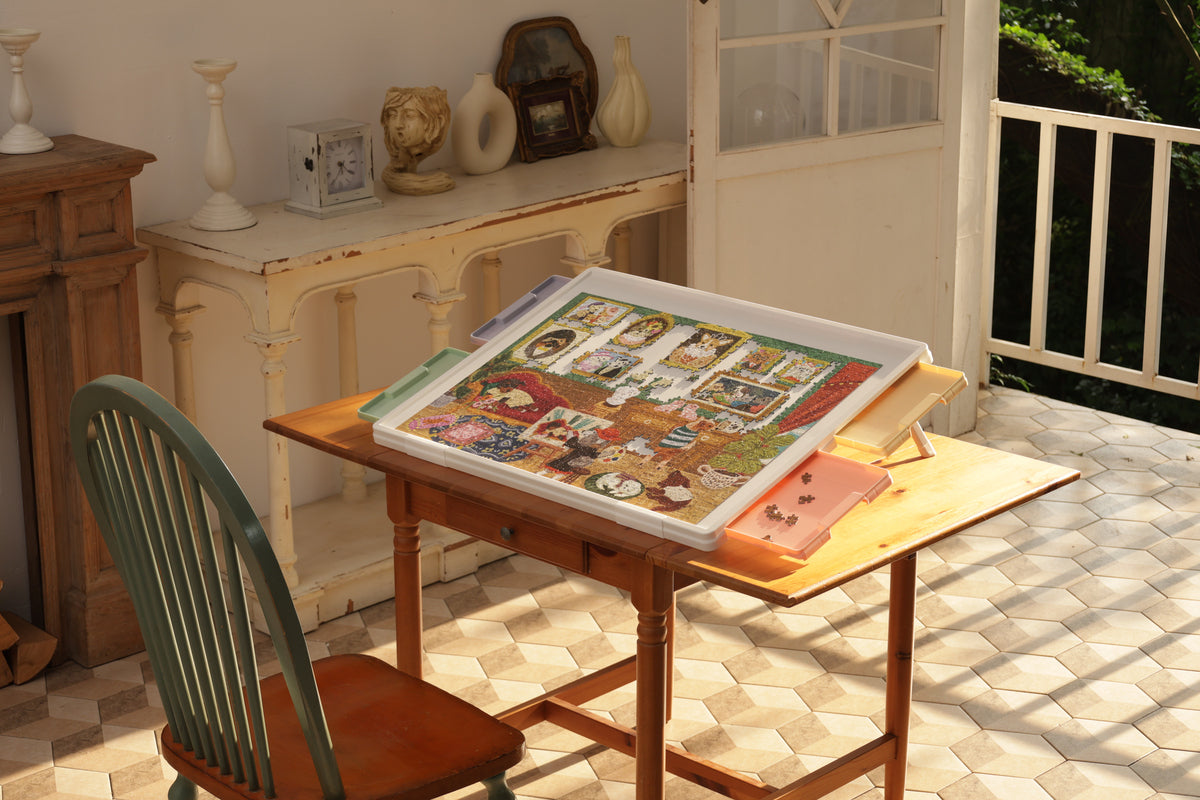
Modern puzzlers increasingly use puzzle boards to improve comfort and protect in-progress puzzles. You can browse puzzle boards for 1000–1500-piece puzzles for a more organized and ergonomic setup.
Cognitive Benefits: Strengthening the Brain
Memory & Recall
The process of identifying, sorting, and recalling pieces continually strengthens working memory. Puzzlers often report improved day-to-day recall after regular puzzling sessions.
Problem-Solving Skills
Puzzles reinforce strategic thinking by encouraging systematic approaches: building edges, sorting pieces, testing fits, and refining hypotheses. This mirrors real-world problem-solving patterns.
Spatial & Visual Intelligence
Rotating shapes mentally, comparing patterns, and scanning for micro-details enhances spatial reasoning and visual processing—skills useful in art, design, engineering, and navigation.
Psychological Benefits: Calm, Focus & Stress Relief
Stress Reduction
The repetitive, tactile nature of puzzling helps quiet mental noise and bring attention into the present. Many experience a grounding effect that mimics meditation.
Flow State
Each piece placed correctly triggers a small dopamine response, creating a pattern of micro-rewards that encourages deeper focus and enjoyment.
A Better Digital Detox
Puzzles offer a non-digital alternative to winding down, reducing blue-light exposure and overstimulation before bedtime.
A portable puzzle board makes this easier by allowing puzzlers to work comfortably anywhere. Explore portable tilting puzzle boards for flexible puzzling routines.
Benefits Across Age Groups
Children
- Improves focus and patience
- Strengthens fine motor skills
- Builds pattern recognition
Adults
- Reduces stress after work
- Supports mental clarity
- Encourages consistent mindfulness
Seniors
- Helps maintain cognitive sharpness
- Enhances hand–eye coordination
- Provides meaningful daily engagement
Ergonomic puzzle boards—especially those with tilt—are particularly useful for seniors. See ergonomic tilting puzzle boards.
Lifestyle Benefits: Creative, Affordable & Flexible
Low-Cost Enrichment
Puzzles offer hours of entertainment at minimal cost per hour, making them one of the most affordable hobbies for all ages.
Art You Can Display
Many puzzlers glue, frame, and hang completed puzzles as personalized artwork, adding meaning to the hobby.
Fits Any Schedule
Whether you have 10 minutes or an hour, puzzles adapt to your routine smoothly. Puzzle boards make short sessions easier—simply pick up the board and continue where you left off. Browse puzzle boards with drawers.
Why Many Puzzlers Upgrade to a Puzzle Board
Common Problems Without One
- Pieces fall off or get lost
- Pets and children disturb unfinished puzzles
- You must clear the dining table frequently
- Neck and back discomfort from leaning forward
- Inability to move the puzzle between rooms
How a Puzzle Board Helps
- Drawers keep pieces organized
- Rotation improves reach and comfort
- Tilt reduces neck strain
- Defined edges keep pieces secure
- Portable boards protect in-progress puzzles
For frequent puzzlers, a puzzle board is a practical upgrade that improves comfort, organization, and long-term enjoyment. Explore puzzle boards for 1000–1500 piece puzzles.
Conclusion
Puzzle solving strengthens the mind, calms the nervous system, enhances relationships, and supports a healthier digital balance. With the right tools—especially rotating or tilting puzzle boards—puzzling becomes even more accessible and enjoyable across all ages.
If you’re ready to make puzzling a long-term habit, consider upgrading your setup: explore ergonomic puzzle boards.

FAQ
Are puzzles good for the brain?
Yes—puzzles activate memory, spatial reasoning, and problem-solving networks.
How often should I puzzle?
Even 15–30 minutes a few times a week provides benefits.
Do puzzles help with anxiety?
Puzzles promote focus and grounding, making them a helpful stress-relief activity.
What tools make puzzling easier?
Tilted and rotating puzzle boards with drawers greatly improve comfort and organization. Try rotating puzzle boards.
What size board works best for 1000 and 1500 piece puzzles?
1000-piece puzzles: about 30” × 22”. 1500-piece puzzles: about 35” × 27”.
Share


Social Benefits: Connecting Through Shared Focus
Family Bonding
Puzzles naturally facilitate conversation and connection. Working on a shared task reduces pressure and creates a relaxed environment for meaningful interaction.
Couples & Friends
Puzzle nights offer a cozy, screen-free alternative to typical social activities. Couples often use puzzles as a quiet shared ritual.
Community & Senior Engagement
Community centers and senior programs use puzzles for cognitive stimulation and low-impact social engagement.
For similar setups, explore rotating puzzle boards designed for shared puzzling.