

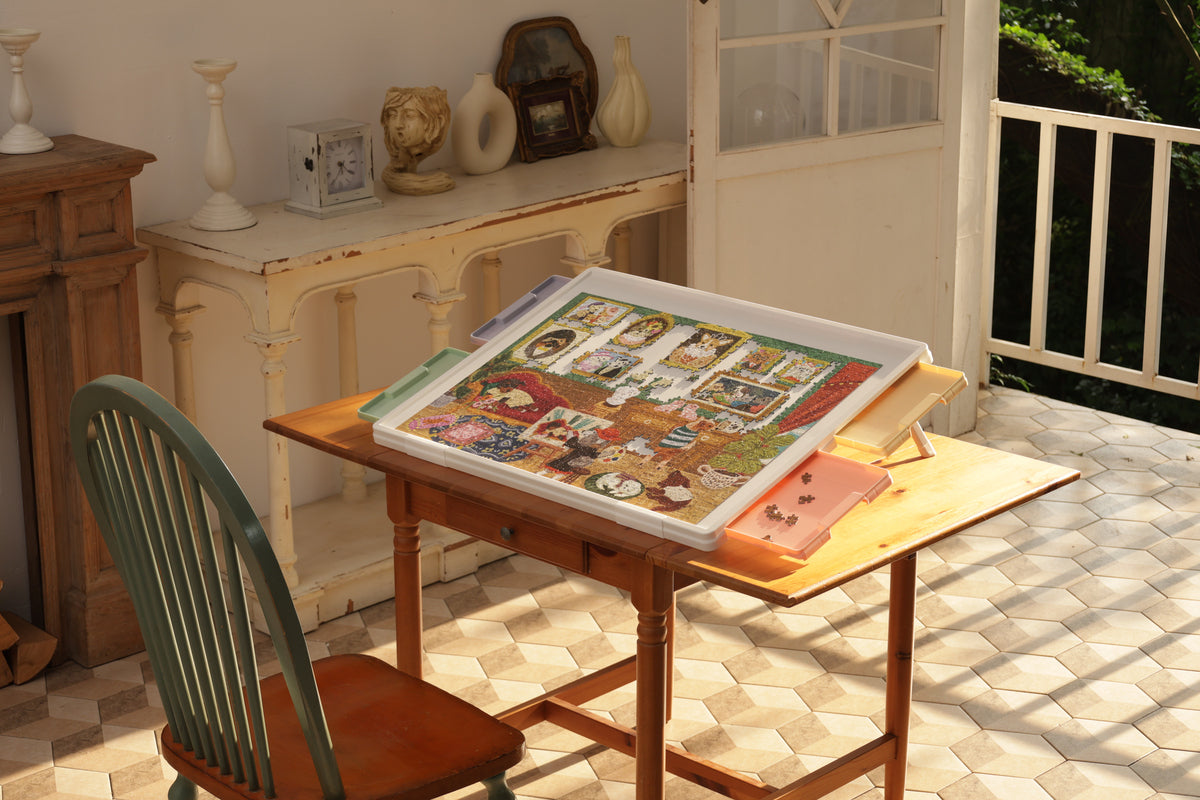

What to Use for Puzzle Board

When you sit down to work on a jigsaw puzzle, the last thing you want is frustration. But for many puzzlers, that’s exactly what happens—pieces scatter across the dining table, kids or pets interrupt, and halfway through, you’re forced to pack everything up for dinner. The question naturally comes up: what should you actually use for a puzzle board?
Let’s explore the options, from simple DIY fixes to professional puzzle tables and boards, and figure out what makes the most sense for your puzzling lifestyle.
The Old Standbys: Cardboard and Foam Board
For beginners, one of the most common options is a large piece of cardboard or foam board. It’s inexpensive, easy to find at any craft store, and light enough to move around.
But here’s the downside: cardboard bends easily. If your puzzle is bigger than 1000 pieces, the weight alone can make the board sag, causing pieces to pop out. Foam boards are a little sturdier, but they warp with humidity or even after being used a few times.
Linda, 45, from Texas, shared her experience:
“I started with a foam board from Walmart. It worked for a couple of small puzzles, but once I tried a 1500-piece puzzle, the middle started dipping. Half my pieces kept sliding off. I realized cheap boards don’t work for long.”
So while cardboard or foam might work in a pinch, they’re not ideal for serious puzzlers.
Wooden Boards: Strong but Impractical
Another common choice is wood. Some puzzlers make DIY wooden boards or repurpose pieces of plywood. The advantage is clear: wood is strong, flat, and doesn’t bend.
The problem? Weight. A large puzzle board made of wood is heavy, hard to move, and often too bulky to store in small homes or apartments. Plus, wood stains easily—spilled coffee or tea can leave permanent marks.
James, 54, from Michigan, tried this route:
“I built a wooden puzzle board in my garage. It was sturdy, sure, but it weighed a ton. My wife hated it because we couldn’t move it out of the dining room. It wasn’t realistic for daily use.”
Wooden boards are reliable, but they’re not practical for modern puzzling needs.

Felt Mats and Roll-Up Systems
If you’ve browsed puzzle accessories, you’ve probably seen felt mats. They’re popular for one reason: portability. You build your puzzle on a large felt surface, then roll it up with an inflatable tube to store it away.
This is clever, but it has limitations. Felt mats aren’t completely flat, so puzzle pieces don’t sit as securely. Rolling up a puzzle can also loosen connections, and some puzzlers report losing pieces or messing up their progress.
So while mats solve the space problem, they often add new frustrations.
Puzzle Tables and Boards: The Smartest Choice
Unlike cardboard, wood, or felt mats, a professional puzzle board is designed specifically for puzzlers. It doesn’t just give you a flat surface—it gives you a complete system that makes puzzling easier, safer, and more enjoyable. Here’s why so many puzzlers now call it the best puzzle board available.
1. Built-in Drawers for Organization
Instead of juggling bowls or plastic bags for sorting, puzzle boards often come with color-coded drawers. You can separate sky pieces, edge pieces, and detailed patterns into their own compartments. This keeps everything tidy and speeds up the puzzling process.
Sarah, 39, from California, told us:
“I used to lose track of where I put certain pieces. Now I slide open the blue drawer, and all my sky pieces are waiting for me. It feels like the board is doing half the work.”

2. Rotation for Easy Reach
Many puzzle tables and boards now feature a rotating base, letting you spin the puzzle like a lazy Susan. No more standing up or stretching across the table to reach that stubborn corner.
Daniel, 50, from Ohio, shared:
“Before, I had to walk around the table to place pieces. With a rotating puzzle board, I stay seated and just turn the surface. It feels effortless.”
3. Tilting Stand for Comfort
One of the biggest game changers is the tilting function. By angling the surface like an artist’s easel, you reduce neck and back strain. For puzzlers who spend hours on big puzzles, this makes all the difference.
Helen, 63, retired nurse from Florida, explained:
“I love puzzling, but my doctor told me to stop because of my back pain. Then I found a tilting puzzle board. Now I can puzzle for hours without discomfort—it brought my hobby back to life.”

4. Protective Mat for Peace of Mind
Puzzling doesn’t always happen in one sitting. Protective mats cover your progress, keeping pets, kids, or even a sudden draft from ruining your work. They also gently press pieces down, preventing them from shifting.
5. Portability and Versatility
Modern puzzle boards are lightweight but durable. Made with ABS or similar materials, they’re easy to carry from the dining room to the sofa, or even to pack for a weekend trip. They’re not just for puzzling either—many families use them for board games, crafts, or even serving snacks.
Why It’s the Best Choice
At the end of the day, puzzle boards combine everything puzzlers need: comfort, stability, organization, and protection. They’re not just another accessory—they’re what turn puzzling from a frustrating chore into a joyful ritual.
Choosing the Best Puzzle Board
If you’re wondering what to use for puzzle board, the answer depends on your lifestyle.
-
For casual puzzlers: Cardboard or foam might be okay for the occasional 500-piece puzzle.
-
For small spaces: Felt mats offer storage, but expect some hassle.
-
For serious puzzlers: A dedicated puzzle board or table is the best puzzle board you can buy.
Puzzle boards are more than a surface—they’re a system. They keep your puzzle safe, your body comfortable, and your hobby enjoyable.
So what should you use for a puzzle board? You could get by with cardboard, wood, or felt mats—but each comes with big compromises. If you truly want to enjoy puzzling without the hassle, the answer is clear: invest in a purpose-built puzzle board.
It’s not just about finishing puzzles faster—it’s about making puzzling a lasting part of your lifestyle.
👉 Ready to upgrade? Explore our [Puzzle Boards Collection] and see why Playboda is trusted as the best puzzle board by puzzlers across the US.
Share


