

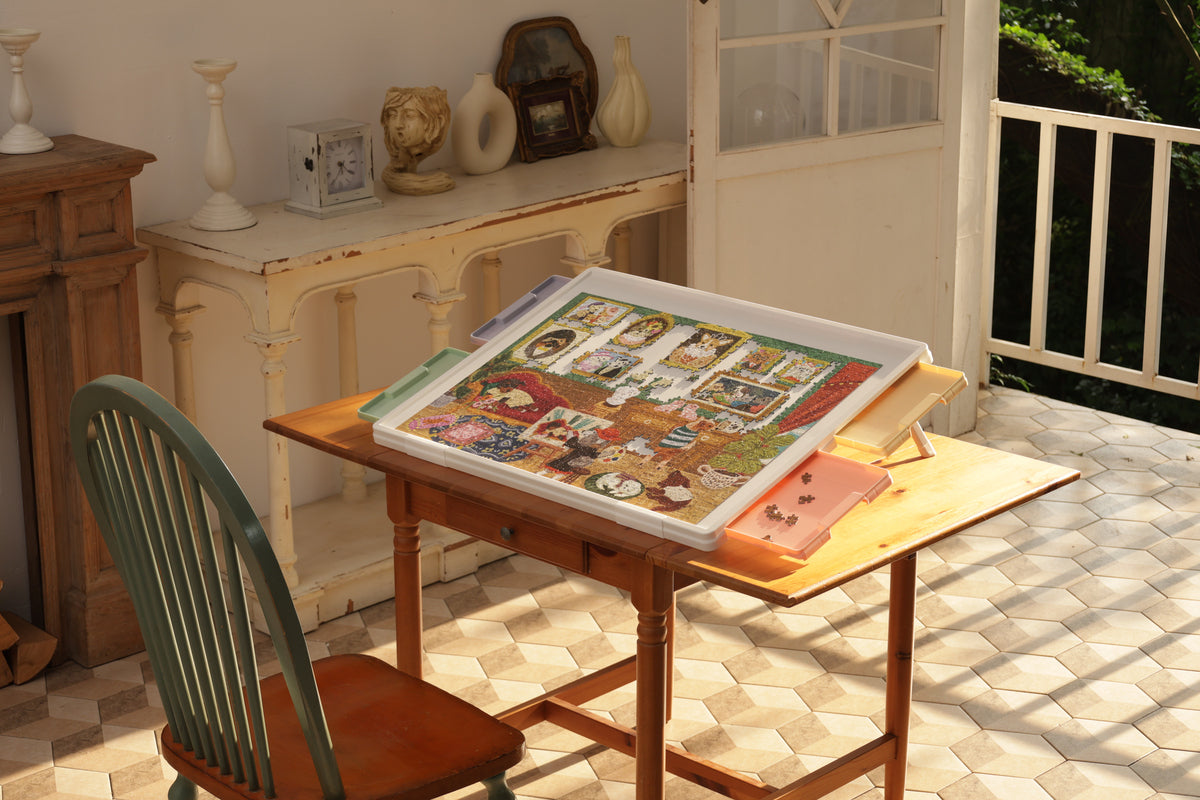

How to Build a Puzzle Board with Drawers
Summary: This practical DIY guide explains how to build a puzzle board with drawers — from choosing the right size and materials to building a stable surface, adding shallow storage drawers, and avoiding common mistakes. You’ll also learn how drawers help sort and protect pieces, when DIY is worth it versus buying a ready- made board, and get clear answers in a final FAQ.
If you’ve ever worked on a jigsaw puzzle larger than 500 pieces, you’ve probably faced the same frustrations: pieces scattered everywhere, unfinished puzzles taking over your dining table, and no good way to pause and resume without losing progress. That’s exactly why so many puzzlers search for how to build a puzzle board with drawers.
A puzzle board with drawers isn’t just a flat surface. It’s a workflow. The board gives you a stable workspace, while drawers let you sort, store, and protect pieces throughout the puzzling process. For people who puzzle regularly—or live in homes where tables are shared—this setup can turn a “constant mess” hobby into something you can actually sustain.
In this guide, you’ll learn how to plan your build, pick materials that balance durability and weight, assemble drawers that actually slide smoothly, and avoid the most common DIY mistakes. We’ll also help you decide whether DIY makes sense—or if a ready-made board is the better use of your time.

What Is a Puzzle Board with Drawers?
A puzzle board with drawers is a flat working surface sized for jigsaw puzzles, combined with built-in storage compartments—usually shallow drawers—that hold loose pieces while you work.
Compared to alternatives like puzzle mats or bare tables, a drawer-based board offers three big advantages:
- Organization: Sort pieces by color, shape, or section without creating piles on the surface.
- Protection: Drawers keep pieces from being lost, mixed, or knocked onto the floor.
- Continuity: Pause and resume later without re-sorting everything.
This setup is especially helpful for 1000-piece and 1500-piece puzzles, where sorting and long-term progress matter most.
Planning Your Puzzle Board Before You Build
Planning is where most DIY builds succeed or fail. Many boards fall short not because the builder lacks skill, but because the design decisions weren’t made early enough—especially around size, drawer layout, and how you’ll actually use the board while seated.
Choosing the Right Board Size
Start by deciding what puzzle size you want to support. As a practical baseline:
- 1000-piece puzzles: typically need about 30" × 22"
- 1500-piece puzzles: often require 32" × 24" or larger
- Add at least 1–2 inches of margin on each side so you’re not working at the edge.
Too small and pieces pile up. Too large and the board becomes heavy and awkward to move.
Deciding on Drawer Layout
Drawers can be designed in a few different layouts:
- Side drawers (left and right): easiest to access while seated
- Bottom drawers: cleaner look, but less convenient reach
- Removable trays: simpler build, less carpentry, but less integrated
Most puzzlers find 4–6 shallow drawers ideal. Deep drawers sound helpful, but they tend to bury pieces and slow down sorting.
Materials: What to Use for the Board and Drawers
Material choice directly affects durability, weight, and the “feel” of puzzling. The goal is a surface that stays flat, doesn’t warp, and offers enough friction to keep pieces from skating around—without being so rough that it snags or damages puzzle edges.
Board Surface Materials
Solid, DIY-friendly choices include:
- MDF with a laminate or felt overlay: flat, affordable, easy to work with
- Plywood with a sealed surface: strong and stable, but often heavier
- ABS or plastic-coated panels: lightweight and easy to clean, but harder to DIY well
Avoid untreated wood surfaces. Pieces slide unpredictably, and the grain can be abrasive over time.
Drawer Materials and Lining
For drawers, thin plywood or MDF works well. Keep drawer depth under 1.5 inches so pieces don’t stack and disappear. Smooth sliding matters more than strength because puzzle pieces are light.
Lining drawers with felt or cork helps keep pieces from sliding and mixing—especially if you ever move the board.
How to Build a Puzzle Board with Drawers (Step-by-Step Overview)
Exact construction depends on your tools and skill level, but most builds follow a similar sequence. The biggest time sink is usually drawer alignment and fit—so don’t rush that part.
- Cut the main board to your target size (including margin).
- Build a shallow frame underneath the board to support drawers and keep the surface rigid.
- Assemble drawers and test-fit them repeatedly until they slide smoothly.
- Attach the puzzle surface (felt/laminate overlay) to create the right texture.
- Finish edges and corners so nothing catches sleeves, skin, or puzzle pieces.
Many DIY builders underestimate how long fitting takes. A drawer that binds by even a few millimeters becomes annoying fast—especially during long sessions.

How to Organize Puzzle Pieces Using Drawers
Once you have drawers, your puzzling rhythm changes. Instead of creating “piece mountains” across the surface, you can keep the working area clean and use drawers as your sorting system.
Common strategies include:
- Color-based sorting early on
- Edges in one drawer, interiors in others
- Section-based sorting once the image starts forming
Many puzzlers shift methods mid-project. Drawers make it easy to reorganize without dumping everything back onto the table.
Common DIY Mistakes to Avoid
A puzzle board with drawers sounds simple, but a few mistakes show up repeatedly in DIY builds—and they usually affect comfort and usability more than appearance.
- Making the board too heavy: solid wood feels sturdy, but portability disappears quickly.
- Placing drawers too close to the edge: your forearms need space while you work.
- Ignoring ergonomics: a flat board encourages long periods of neck flexion and shoulder tension.
- Overcomplicating the design: more features mean more failure points and more maintenance.
DIY vs. Ready-Made Puzzle Boards with Drawers
DIY can be satisfying, especially if you already have tools. But it’s worth being honest about the real trade-offs: time, precision, and the ergonomic features you may not be able to replicate easily.
DIY Pros
- Full control over size and layout
- Potential cost savings (if tools and materials are already available)
- The satisfaction of building something you’ll actually use
DIY Cons
- Time-intensive planning and fitting
- Drawer alignment can be surprisingly finicky
- Hard to add ergonomic features like tilt and rotation well
- Boards often end up heavier than expected
Is Building a Puzzle Board with Drawers Worth It?
Building your own puzzle board with drawers is worth it if you enjoy DIY projects, you already own the tools, and you want a very specific setup that ready-made products don’t match.
Buying a ready-made board is often the smarter choice if you value portability, puzzle for long sessions, want ergonomic features, or simply prefer spending your time puzzling instead of tuning drawer slides.
Conclusion
A puzzle board with drawers can dramatically improve how you puzzle—reducing clutter, protecting pieces, and making long projects feel manageable. Building one yourself is absolutely possible, but the best results come from thoughtful planning, smart material choices, and realistic expectations around drawer fitting and weight.
Whether you build or buy, the goal is the same: a stable surface that keeps your puzzle and pieces secure, organized, and enjoyable from the first piece to the last.
Ready to upgrade your setup? Explore options here.

FAQ
1.How big should a puzzle board with drawers be?
For 1000-piece puzzles, aim for at least 30" × 22". Larger puzzles require additional margin so you’re not working right at the edge.
2.What surface works best to hold puzzle pieces in place?
A smooth but slightly textured surface—like felt or a laminated top—helps prevent slipping while still protecting puzzle edges.
3.Are drawers better than puzzle mats?
Drawers provide better organization and protection. Mats are more portable but often less stable, and pieces can shift during storage.
4.Can a DIY puzzle board be portable?
Yes, but weight control is critical. Lightweight materials and a sensible size matter more than thickness.
5.How long does it take to build one?
Expect anywhere from a weekend to several days, depending on tools and experience. Drawer fitting often takes the longest.
Share


